| marie-hélène le ny |
|
photographiste |
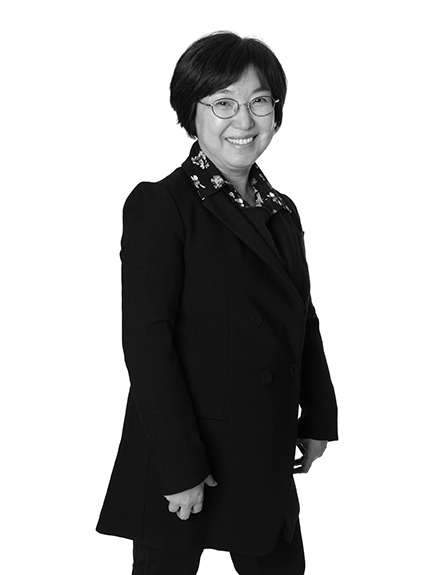 |
"I was trained as an anthropologist. I wanted to explore the historical and political construction of gender. I was interested in the formation of modern bioscience as a historical and social construct. Many things applying to women are gendered and culturally institutionalized. I focused my thesis on how women’s bodies have been defined in the South Korean modernization project. There have been many policies and practices surrounding pregnancy and women’s fertility. Abortion is now illegal, but in the 1970s, the Korean government was permissive when it wanted to control the number of children under certain health and economic circumstances. The nation defines and deals with the ways in which women’s sexuality is practiced. I wanted to analyze the ways in which women’s questions are raised within the frame of nationalism and development. Producing critical knowledge about women is very political. Thus I wish to challenge the mainstream of scholarship with a feminist perspective as a new academic movement. In the 1980s and 1990s, feminists contested patriarchal culture and sought to achieve a fair share of economic resources for women with the aim of emancipating women as political subjects. But young people today are increasingly individualistic and competitive about rights and equality as neoliberal subjects constructed in market society. Cultures, religions, markets, and the state are powerful controlling forces on women independently and intersectionally. I expect to see young feminists challenge and manage these cultural wars of gender. We always say that the woman’s body is a battlefield. You think that your body belongs to you, but how about state fertility policies and markets as well as your boyfriend’s ideas about your body? Capital and state power and the male gaze are always on your body. Beauty is now defined by the money you spend on it. Women could and should think about this world by themselves. To have the ability to think and speak for themselves, women must understand that knowing is loving themselves." |
||
|
Eunshil Kim, Professor, Department of Women's Studies, Director, Korean Women's Institute, Director, Asian Center for Women's Studies Ewha Womans University, Seoul, South Korea |
|||
|
|
|
|